

Welcome to our dedicated Pastors Corner!

Answers to Questions
We will help provide Biblically solid answers to questions you may have about the Hebrew background of our faith

Get Equipped
We offer short and to the point bible studies for pastors and leaders who wish to go deeper in their faith. Contact us for more details about our current courses.
Pastor’s Questions:
[taxopress_termsdisplay id=”1″]
God’s Restored Blueprint for Pastors
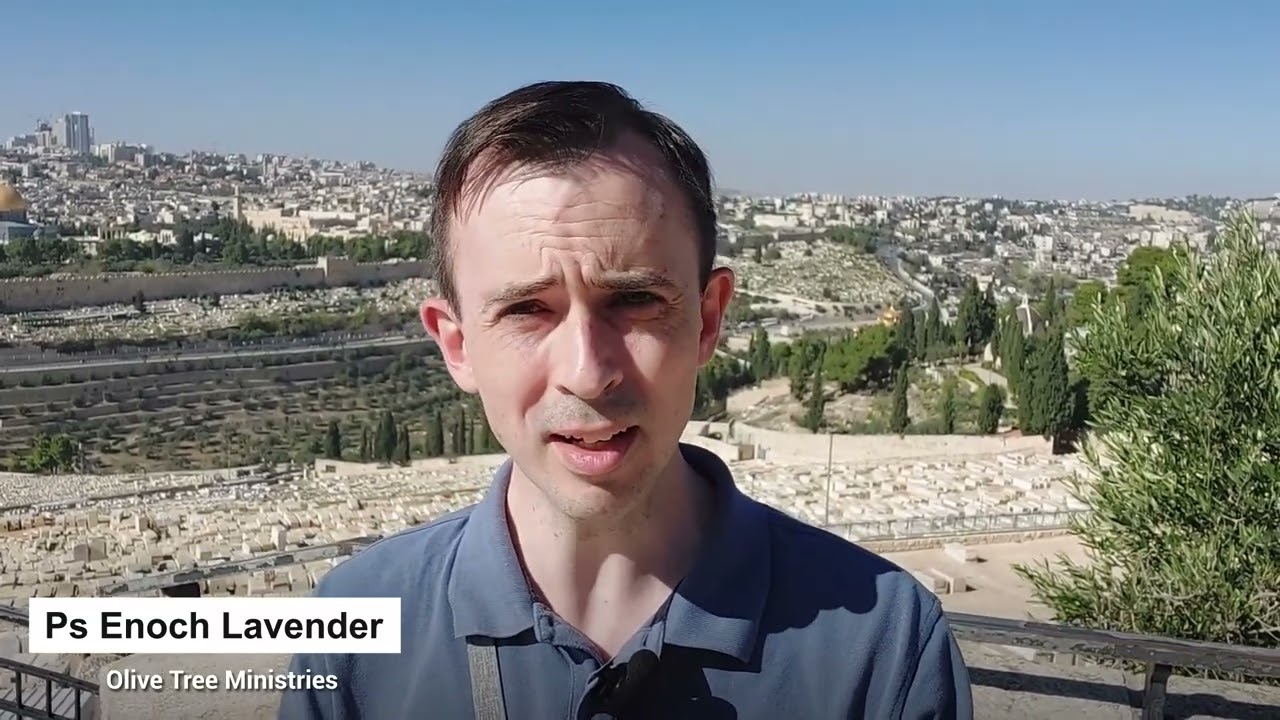
Ps Enoch Lavender was born in Australia, raised in Norway, spent time living in China and is now based on the Gold Coast of Australia. He has been studying Hebrew and the Jewish roots of our faith for the past decade, and has a keen interest in the Middle East from a Bible prophecy perspective.
Contact Enoch and Olive Tree Ministries
You Are A Kingdom of Priests
Ps Enoch Lavender was born in Australia, raised in Norway, spent time living in China and is now based on the Gold Coast of Australia. He has been studying Hebrew and the Jewish roots of our faith for the past decade, and has a keen interest in the Middle East from a Bible prophecy perspective.
Contact Enoch and Olive Tree Ministries
Elections Aus 2025 and a Warning to the Church
I hope I am wrong, but I have a sense of warning about the upcoming elections in Australia.
My family and I are currently on a 9 month ministry and intercessory trip around Australia.
It just happens that the very morning after the elections, we are scheduled to leave head into the great wilderness known as the Nullarbor as we trek towards Esperance and Perth.
I feel like our journey is prophetic, and that the church is also about to enter a time of the wilderness right after this election.
For my wife and I, the question is, are we ready for the journey ahead? Do we have the provisions we need for us and our family and are we prepared for the long journey ahead across the Nullarbor?
Similarly, is the church ready for what lies ahead? Are we ready for hard times spiritually, financially and even in terms of religious freedom in this nation?
Just as our journey across the wilderness is rapidly approaching, so the church must get ready quickly for what lies ahead.
Our journey ahead will be along Australia’s longest straight road (over 140kms long!). The destination after this long arduous journey is the city of Esperance – whose name means “Expectant Hope”.
I feel like there is hope ahead for the church on the other side of this wilderness. However we will have to hold our course staying on the straight road God has ahead of us. We can’t turn to the left or right away from God’s standard in this difficult season which is ahead.
Ps Enoch Lavender was born in Australia, raised in Norway, spent time living in China and is now based on the Gold Coast of Australia. He has been studying Hebrew and the Jewish roots of our faith for the past decade, and has a keen interest in the Middle East from a Bible prophecy perspective.
Contact Enoch and Olive Tree Ministries
What is the weekly torah portion and why do I read it?
Ps Enoch Lavender was born in Australia, raised in Norway, spent time living in China and is now based on the Gold Coast of Australia. He has been studying Hebrew and the Jewish roots of our faith for the past decade, and has a keen interest in the Middle East from a Bible prophecy perspective.
Contact Enoch and Olive Tree Ministries
Will there be sacrifices in the rebuilt Temple? Will this be an abomination to God?
Thank you for asking a really great question.
Many of us have grown up in Church with a theology that says that Jesus is the ultimate sacrifice, putting an end to the sacrificial system. While it is built on truth, its conclusions about the sacrificial system being done away with clashes directly with the practice of the early disciples.
For example, after he wrote most of his NT letters, Paul the Apostle headed back to Jerusalem and happily agreed to pay the costs of four believers who were completing their vows. This included the believers offering a range of sacrifices in the Temple – costing in todays terms literally thousands of dollars. Neither these believers, nor Paul himself had an issue with performing this service. In Acts 24:17 Paul further explains that his purpose of going to Jerusalem in the first place was to give alms and offerings (in the language of the day, this clearly meant to sacrifice in the Temple). The book of Acts highlights further that the disciples met regularly in the Temple and were in high esteeem with all the people (which would have been hard to do if they suddenly rejected the God-given sacrificial system). Furthermore, Acts 6:7 describes that a number of priests joined the faith, and again there is no mention of them ceasing their work in the Temple because of their new found faith.
In essence the sacrifice of Jesus is on a higher level and represents a higher priesthood and does not do away with the Aaronic priesthood, it just serves a higher function. After all, the Aaronic priesthood was never able to take away sins in the first place. Furthermore, the Aaronic priesthood appears to be coming back into action in the Millennium according to the prophecies of Ezekiel.
It is true that the Aaronic sacrifices pointed to Jesus and gave much light on what He did for us. As such, these sacrifices would have taken on extra deep layers of meaning for these early disciples.
I hope this helps you, and let’s all continue to explore for ourselves what the Bible says of this topic.
I explore a similar topic in this video – ‘Can Christians support the rebuilding of the Temple?’:
Ps Enoch Lavender was born in Australia, raised in Norway, spent time living in China and is now based on the Gold Coast of Australia. He has been studying Hebrew and the Jewish roots of our faith for the past decade, and has a keen interest in the Middle East from a Bible prophecy perspective.
Contact Enoch and Olive Tree Ministries
What do you think of the 2022 Commonwealth Games opening ceremony and the seeming worship of giant bull?
The scenes of a woman riding a giant mechanical bull and it being worshiped during the opening ceremony certainly has prophetic implications.
While Birmingham is known to be represented by a bull, it certainly looked and felt like worship of a giant beast.
Another layer to consider is that the woman riding the bull also is reminiscent of the Myth of Europa, the pretty princess (of whom Europe is named) who was raped by the God Zeus masking himself as a bull. This myth is increasingly being promoted all over Europe

Enoch Lavender was born in Australia, raised in Norway, spent time living in China and is now based in Melbourne, Australia. He has been studying Hebrew and the Jewish roots of our faith for the past decade, and has a keen interest in the Middle East from a Bible prophecy perspective.
What Tours to Israel do you recommend?
Enoch Lavender was born in Australia, raised in Norway, spent time living in China and is now based in Melbourne, Australia. He has been studying Hebrew and the Jewish roots of our faith for the past decade, and has a keen interest in the Middle East from a Bible prophecy perspective.
What is your understanding of Paradise, Abraham’s Bosom and the Resurrection?
Enoch Lavender was born in Australia, raised in Norway, spent time living in China and is now based in Melbourne, Australia. He has been studying Hebrew and the Jewish roots of our faith for the past decade, and has a keen interest in the Middle East from a Bible prophecy perspective.
Did the High Priest say ‘It is Finished’ when he offered the Passover sacrifices in the Temple?
There is a teaching going around that when the High Priest finished the final Passover sacrifice, he would say ‘it is finished’, and that this was at the same time as Jesus’ final words.
While a Jewish understanding of the Passover offers us many rich insights into the final hours of Jesus on earth, there is no record in Jewish writings or tradition of the High Priest having this custom. For more details see https://ffoz.org/discover/passover/messianic-mythology-and-passover.html
FFOZ are by the way a very very good resource for deep diving into the Jewish background of the NT.
Enoch Lavender was born in Australia, raised in Norway, spent time living in China and is now based in Melbourne, Australia. He has been studying Hebrew and the Jewish roots of our faith for the past decade, and has a keen interest in the Middle East from a Bible prophecy perspective.